

The Quantification Analytics Tool (QAT) is a modernized solution for country-led forecasting and supply planning, designed to enhance functionality through flexible forecasting structures, advanced extrapolation methods, scenario planning, and updated planning logic. QAT supports offline use, enabling data entry without network connectivity and leveraging master data management; it drives standardization and improves visibility across programs. QAT enables users to apply multiple forecasting methods, compare results, seamlessly transfer forecasts into supply plans to optimize procurement and delivery schedules, monitor stock status, and share data with external platforms and stakeholders.

How Does QAT Improve on Existing Planning Software?
Who Should Use QAT?
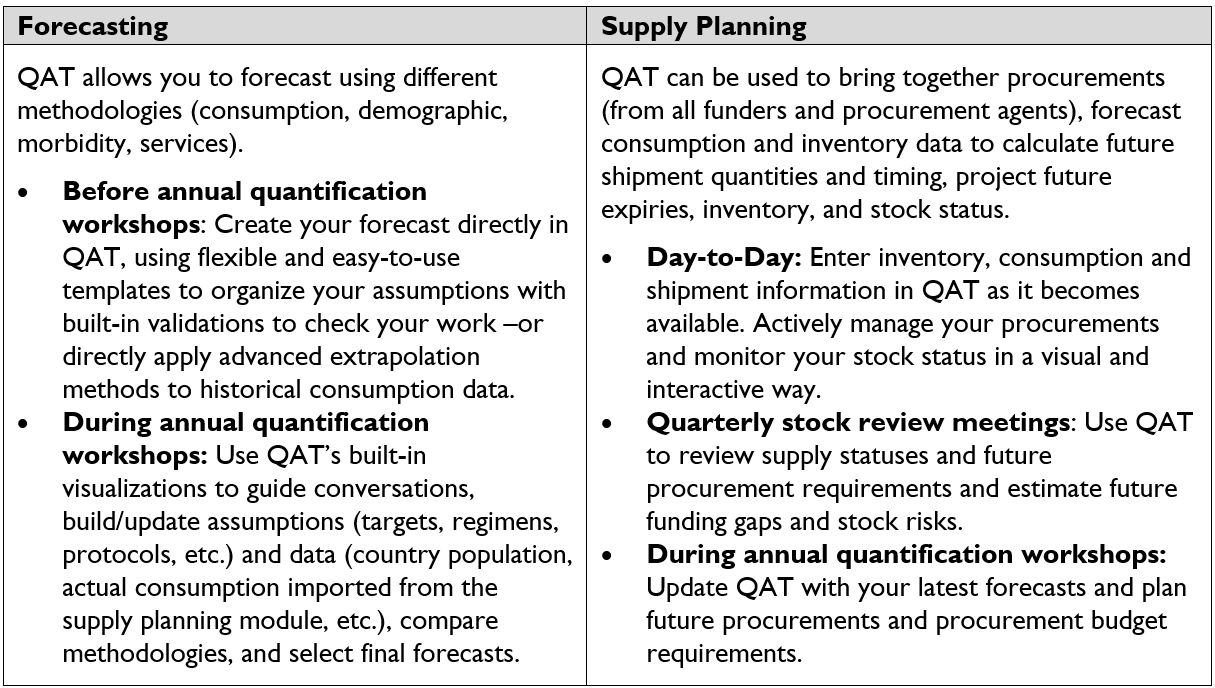
QAT is useful to supply planners, forecasters, Ministry of Health staff, procurers, donors, and other stakeholders, both in country and at the global level. Below is how you might use QAT to help quantification in country:
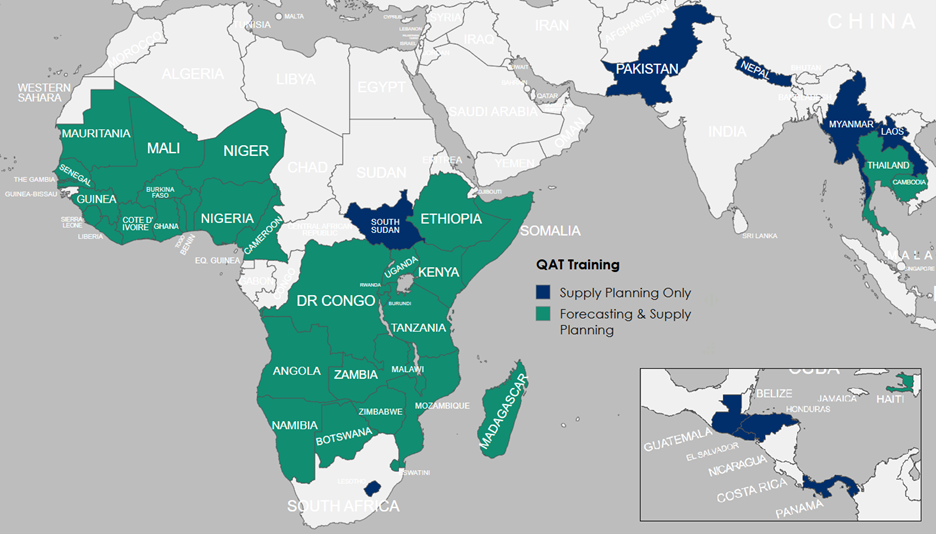
Which Countries Have Been Trained to Use QAT?
Since the launch of QAT’s Supply Planning module in December 2020, the GHSC-PSM FASP Team has supported countries in adopting the tool as a modernized alternative to legacy systems. In June 2022, the Forecasting module became available and has since been widely adopted for use during routine quantification workshops. As of May 2026, a total of 45 countries have been trained to use QAT. Of these, 34 countries have been trained to utilize both the Supply Planning and Forecasting modules, reflecting significant progress in strengthening national quantification capabilities.
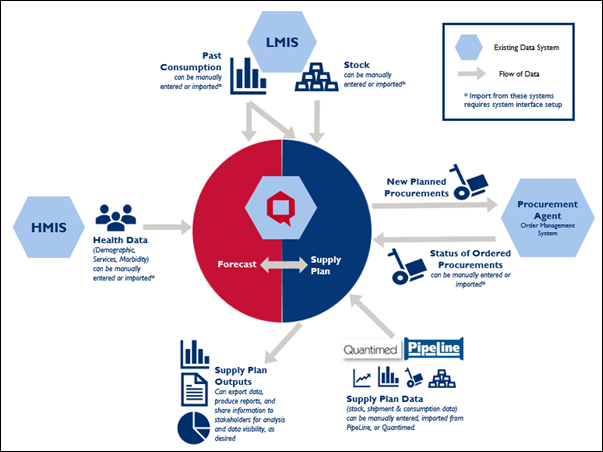
QAT Data Flow Ecosystem
The QAT solution includes internal and external integration, interoperability, and Application Programming Interfacing (API) for data exchanges. Currently, QAT is integrated with ARTMIS, GHSC-PSM’s procurement platform, and the Global Family Planning VAN. Additionally, QAT provides CSV, PDF, and JSON data export options. QAT can integrate with other procurement and logistics management information systems, such as logistics management information systems (LMIS) or health management information systems (HMIS), based on local requirements and resources available to develop and implement integrations.